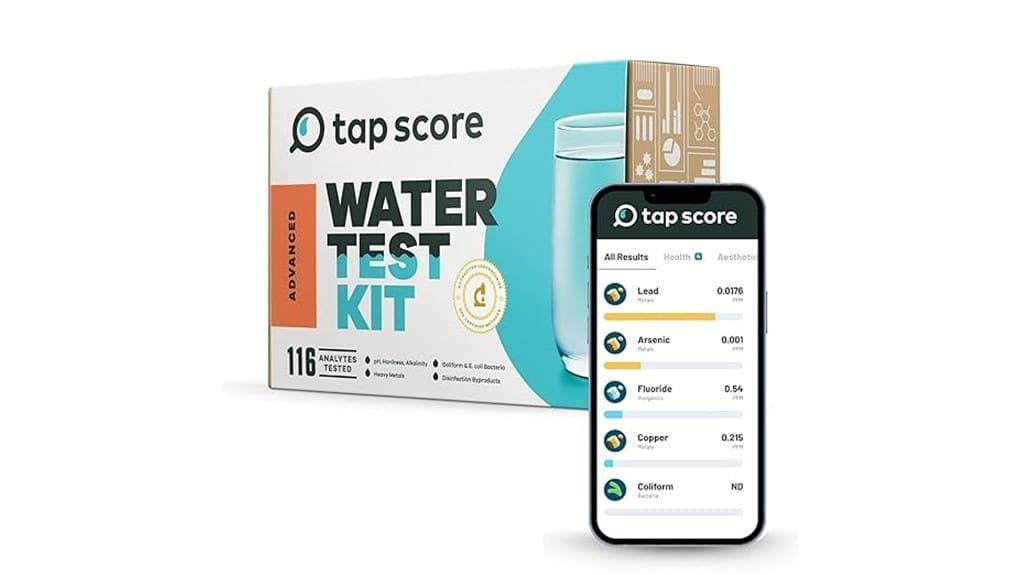
You’ll get a rigorous, lab-certified snapshot of your tap or well water with the Tap Score Advanced kit, testing 116 analytes including heavy metals, nutrients, routine chemistry, and bacterial indicators. The kit includes labeled bottles, chain-of-custody forms, and a prepaid return label; labs report results within five business days and compare levels to EPA standards. You’ll also get health risk scores and expert filtration guidance, making it ideal for wells, rural homes, or areas near farms—keep going to learn specifics.
Some Key Takeaways
- Comprehensive 116-analyte panel detects metals, nutrients, organics, bacteria, and routine chemistry for a thorough water quality snapshot.
- Samples processed by EPA/NELAC/ISO-certified labs with five-business-day turnaround after receipt.
- Report includes concentrations, detection limits, EPA comparisons, short- and long-term health risk scores, and taste/odor notes.
- Kit provides clear sampling instructions, chain-of-custody forms, preservative vials, and a prepaid return label.
- Higher-priced but justified for well owners, rural residents, and those near farms who need confirmatory, expert-supported results.
Quick Verdict: Who Should Buy the Tap Score Advanced Home Water Test Kit?
If you want a thorough, science-backed snapshot of your tap or well water, pick the Tap Score Advanced kit. You’ll get lab-certified results covering contaminants relevant to well ownership and rural concerns, including agricultural and industrial indicators. It’s best if you live on a private well, near farms, or in areas with older infrastructure where metal and organic pollutants matter. You’ll receive actionable risk assessments, unbiased filtration recommendations, and timely reports from EPA/NELAC/ISO-certified labs. If you need a single, reliable test to prioritize remediation or ongoing monitoring, this kit delivers clear, evidence-based guidance. Proper pool chemical storage helps protect water quality around outdoor spaces and nearby wells.
What the Kit Tests: 116 Analytes, Metals, Chemistry, and Bacteria Explained
Having decided this kit fits your needs, here’s exactly what it measures and why each group matters for health and taste. The kit analyzes 116 analytes: heavy metals (lead, arsenic, mercury, cadmium, uranium, etc.), routine chemistry (pH, hardness, alkalinity, silica), nutrients (nitrate/nitrite), disinfection byproducts and chlorine-related organics, and minerals affecting flavor. It also tests bacterial indicators—total coliform and E. coli—to flag sewage or surface contamination. Results come from certified labs and quantify concentrations against health standards, letting you assess acute infection risk, chronic toxicity, corrosion potential, and off-tastes for informed treatment or filtration choices. It can also help homeowners choose appropriate water conservation products and practices for maintaining pools and outdoor water features.
How the Testing Process Works: Kit Contents, Sampling Steps, Lab Chain of Custody, and Turnaround
Because accurate results start with proper sampling, the kit includes everything you need—labeled sample bottles and tubes, preservative vials where required, detailed instructions, chain-of-custody forms, and a prepaid return label—so you can collect and ship samples that meet lab requirements. You follow step-by-step sampling: flush, collect, label, and seal to minimize sample contamination. Complete the chain of custody to document who handled samples and when. Ship promptly using the prepaid label to an EPA/NELAC/ISO-certified lab. Labs analyze and return results within five business days after receipt, ensuring timely, defensible data for decision-making. The kit is ideal for homeowners who want to keep pool water safe and maintain their outdoor spaces.
Report Quality and Expert Support: Interpreting Results, Health Risk Scores, and Filtration Recommendations
Proper sampling sets the stage for reliable results, and the Tap Score report translates lab data into actionable information you can use. The PDF presents analyte concentrations, detection limits, and comparisons to EPA standards, aiding clear result interpretation. Health risk scores quantify short- and long-term concerns; taste and odor notes highlight nuisance contaminants. Filtration recommendations are unbiased, linked to measured contaminants and certified media types. You’ll get remediation planning guidance and priority actions, plus expected contaminant removal rates. If you need clarity, Tap Score’s PhD scientists and engineers offer direct chat support to help turn data into safe, practical fixes. For homeowners maintaining outdoor water features, integrating results with digital pool testers helps keep water balanced and safe.
Value and Alternatives: Price, Shelf Life, Certification, and Competing Home Water Tests
While the Tap Score Advanced kit costs more than basic strip tests, its price reflects a thorough 116-analyte panel, certified-lab analysis, and a 12-month shelf life—so you’re paying for depth and reliable lab-grade results rather than quick screening. For price comparison, factor in EPA/NELAC/ISO lab certification, 5-day turnaround, expert support, and detailed health/taste reports. Alternative brands offer cheaper options—single-parameter strips or smaller multi-analyte kits—but often lack certified labs or extensive panels. If you need confirmatory results for wells near agriculture or industry, Tap Score’s certification and scope justify the cost; budget buyers may consider targeted tests. Homeowners who maintain outdoor water features and pool electrical systems should consider testing water quality as part of broader outdoor maintenance planning.
Some Questions Answered
Can I Test Well Water After Recent Heavy Rainfall or Flooding?
Yes — you should test after heavy rainfall or flooding. Post flood and storm runoff can introduce bacteria, nitrates, chemicals, and metals into wells. Collect samples once surface water has receded but as soon as possible; follow sterile sampling procedures and use certified lab analysis. Rapid testing helps identify contamination risks and guides treatment. If you detect coliforms, nitrates, or unusual chemistry, avoid drinking and consult professionals for disinfection and repairs.
Are Sample Shipping Costs Truly Prepaid for All Locations?
Yes — shipping’s prepaid for most addresses, but you’ll hit prepaid exceptions and shipping limitations in some areas. If you’re outside the U.S., in remote locations, or where carriers restrict biological samples, you’ll need to cover postage or use alternate return methods. The kit materials and lab network outline these exceptions; check the instructions or contact Tap Score’s support to confirm costs for your specific ZIP or country before sampling.
Is a Repeat Test Discounted if Contaminants Are Detected?
Yes — you’ll get a discounted repeat if contaminants are confirmed. The company’s discount policy provides reduced replacement pricing for retests when lab results show verified contamination, covering confirmed failures or chain-of-custody issues. You’ll pay a lower replacement pricing than the original kit; exact amounts vary by case. Contact support with your report; their PhD team will validate the need and authorize the discounted retest promptly.
Can Multiple Homes Use One Kit for Pooled Sampling?
No — you shouldn’t use one kit for pooled or shared sampling across multiple homes. Shared sampling increases cross contamination risks and invalidates individual results, masking source-specific issues. Each home needs its own sterile collection materials and chain-of-custody to guarantee traceable, accurate lab analysis. If you want aggregated data, collect separate samples from each residence and pool results analytically, not physically, to avoid contamination and preserve actionable findings.
How Are Private Customer Data and Results Protected?
You’re protected: the company enforces strict privacy practices and uses data encryption to secure your personal details and results. Labs and servers are certified, access is limited to authorized staff, and transmission uses encrypted channels. Results reports redact unnecessary identifiers unless you consent to sharing. Retention policies and expert support follow regulatory standards, and you can request deletion or export of your records—contact their team for documented confirmation.