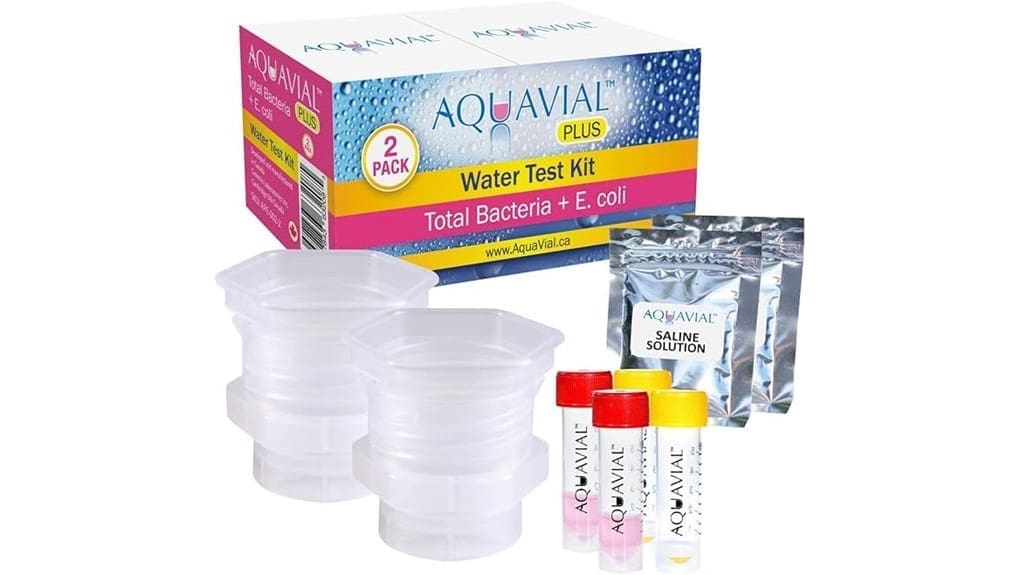
You can get a fast, affordable home screen with the AquaVial Plus 2-pack: one vial flags total bacteria around the EPA-referenced ~500 CFU/mL threshold and the other detects E. coli/coliforms within about 24 hours. It’s easy to use for tap, well, pool, or pond samples and can show high loads in as little as 30 minutes. It’s fine for routine checks but not a legal substitute for lab confirmation, and more detail follows if you want it.
Some Key Takeaways
- Two-vial kit includes one total-bacteria/biofilm test and one E. coli/coliform-specific test for basic home screening.
- Total-bacteria vial flags counts above ~500 CFU/mL, sometimes showing positives in as little as 30 minutes.
- E. coli/coliform vial detects fecal indicators but may require up to 24 hours for a definitive color change.
- Affordable, two-year shelf-life option for routine checks, not a substitute for certified laboratory confirmation.
- Borderline or unexpected results warrant repeat sampling, controlled handling, or professional laboratory testing.
What AquaVial Plus Is and Who Should Use the 2-Pack
Check your water quickly and affordably with the AquaVial Plus 2-pack, a home screening kit that includes one total bacteria/biofilm test and one E. coli/coliform-specific test. You’ll get a low-cost, evidence-based option for routine screening across drinking water, wells, pools, hot tubs, ponds, and lakes. The kit suits diverse consumer demographics: homeowners, renters, pool owners, and small-scale well users who need actionable early warning without lab costs. You’ll use it for targeted checks after seasonal maintenance, post-storm events, or when plumbing changes occur. Results help you decide if professional follow-up or treatment is warranted. It’s an ideal product for people who want to keep their pool water safe with simple, at-home test kits.
How the Total Bacteria and E. Coli Tests Work (What They Detect and Timing)
Because the AquaVial Plus pair targets both broad microbial loads and specific fecal contamination, you’ll get two complementary screens: a total bacteria/biofilm test that signals when counts exceed the EPA-referenced threshold (about 500 CFU/ml) and an E. coli/coliform test that flags fecal-indicator organisms. You collect a water sample, incubate the vial per instructions, and watch for a color change indicating growth. The total-bacteria vial can show positive in as little as 30 minutes for high loads; the E. coli-specific vial relies on longer sample incubation and can take up to 24 hours to reveal fecal contamination. This makes the kit a useful addition to homeowner pool safety routines.
Real-World Accuracy: Sensitivity vs. the EPA 500 CFU/mL Threshold
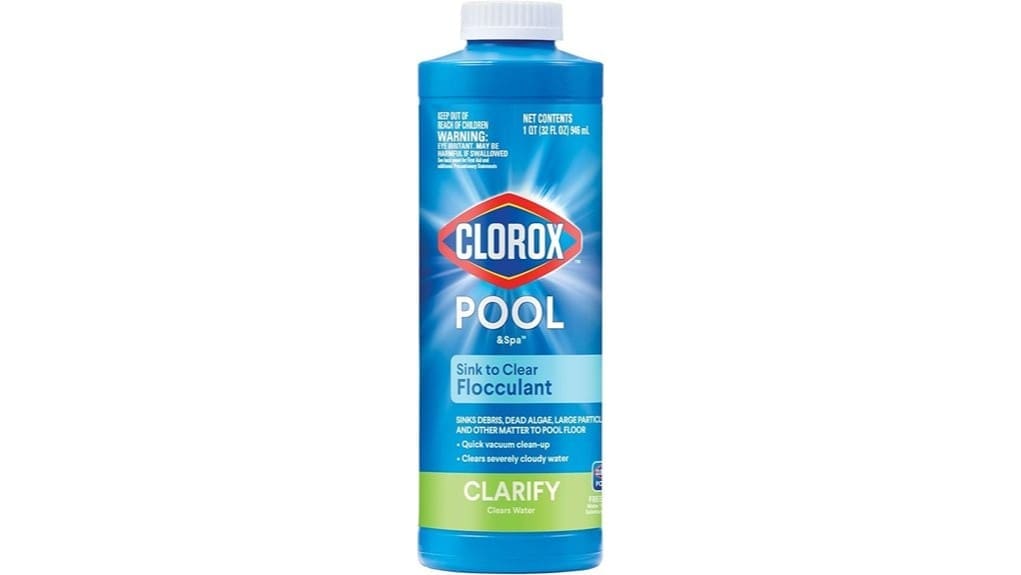
Having seen how the two vials flag broad microbial loads and fecal indicators, let’s look at how the AquaVial Plus performs against the EPA-referenced 500 CFU/mL benchmark in practical settings. You’ll find the total bacteria test reliably detects concentrations slightly above 500 CFU/mL, reducing missed contamination compared with strips. Still, real-world factors—sample heterogeneity, incubation conditions, and threshold variability between microbial communities—can produce occasional false negatives near the cutoff. Treat results close to 500 CFU/mL as indeterminate: repeat sampling, control for handling, or send to a lab for quantitative confirmation to resolve borderline readings. Many homeowners pair testing with simple maintenance steps like flocculants and proper filtration to help achieve clearer pool water.
Step-by-Step Home Testing: Using the AquaVial Plus Kit for Tap, Well, Pool, or Pond
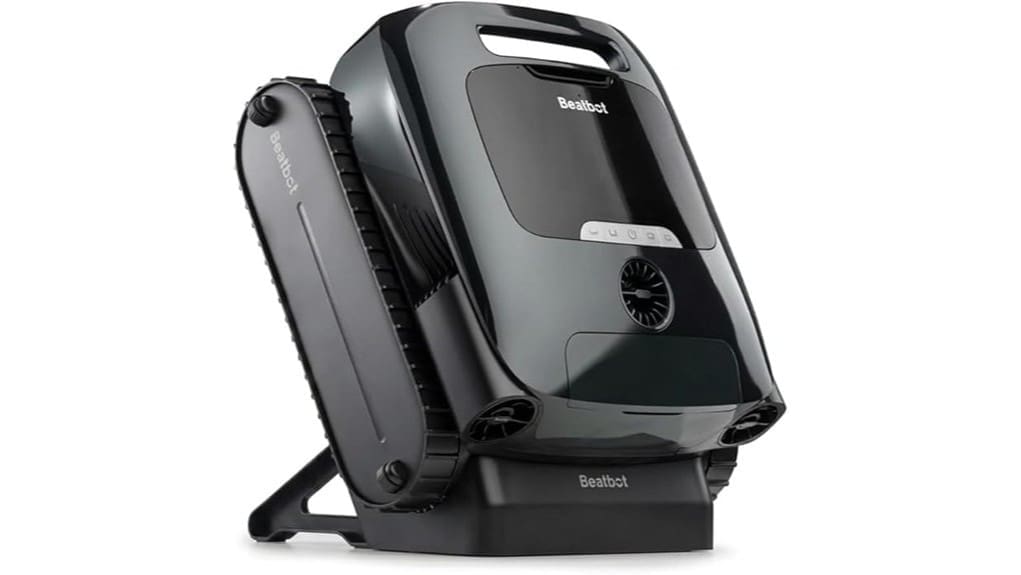
Start by choosing a clean, stable location and gather the AquaVial Plus kit, a sterile container or the vial provided, a timer, and a marker for labeling so you’ll avoid contamination and mix-ups. Rinse the vial if directed, label it with date, time, and location, then collect water mid-stream for taps, below-surface for wells, and 6–12 inches below the surface for pools or ponds. Follow kit instructions: inoculate the media, seal, set the timer. Read total bacteria results as soon as 30 minutes; E. coli results up to 24 hours. Repeat sampling across seasonal variations to capture temporal changes. For routine backyard maintenance, consider incorporating digital pool testers into your testing regimen to monitor chlorine and pH alongside bacterial checks.
Value and Limitations: Cost, Shelf Life, and When to Seek Professional Lab Testing
When you weigh cost against benefit, the AquaVial Plus kit offers an inexpensive, practical way to screen for common bacterial hazards at home while acknowledging it isn’t a substitute for certified laboratory analysis. You’ll find the two-pack provides low per-test cost versus single-use lab panels in a clear cost comparison: labs run dozens to hundreds of dollars, AquaVial runs under that. Shelf life is two years—store cool and use before expiry for reliable sensitivity. Use the kit for routine checks; seek a professional referral when results are positive, when contamination persists, or when legal/clinical confirmation is required. For seasonal pool owners, integrating regular testing with seasonal care routines helps keep outdoor water safe and enjoyable.
Some Questions Answered
Can Aquavial Plus Detect Viruses Like Norovirus or Hepatitis A?
No — it won’t detect viruses like norovirus or hepatitis A. You’re testing bacteria and coliforms; the kit’s scope doesn’t include viral detection, so assay limitations prevent identifying viral particles. For viruses you’ll need specialized viral assays or lab PCR testing. Use this kit as a bacterial screening tool to flag bacterial contamination, then follow up with appropriate virus-specific laboratory tests if viral contamination is a concern.
Is the Kit Safe for Testing Water Used by Infants and Immunocompromised People?
Yes — you can use it, but with caveats for infant safety and immune precautions. The kit screens for bacteria and E. coli reliably, so a negative result lowers risk, yet it won’t detect viruses or all pathogens. For infants or immunocompromised people, follow strict hygiene, consider boiling water or professional lab tests, and retest frequently. If any doubt remains, consult a healthcare or water-quality professional before use.
Are Test Results Affected by Chlorine or Other Pool Sanitizers?
Yes — chlorine interference and sanitizer residues can affect results. You should neutralize or let chlorine/sanitizer levels drop before sampling, because oxidizers can kill bacteria and produce false negatives. For pools or recently treated water, wait until residuals fall to low/undetectable levels or use a validated neutralizer per instructions. That way your bacterial screening and E. coli-specific test will reflect true contamination rather than sanitizer artifacts.
Can I Reuse Components or Run More Than Two Tests With the Kit?
No — you can’t reliably reuse components or run more than two tests; the kit’s reuse policy limits each test device to single use. Reusing vials or strips risks contamination and false positives/negatives even if you attempt component sterilization. Evidence-based practice is to discard used units and follow the two-test count. If you need more tests, buy additional kits or contact the manufacturer for validated reusable options.
Does the Manufacturer Offer Customer Support or Test Result Interpretation?
Yes — the manufacturer provides customer support and offers result interpretation guidance. You can contact Genemis Laboratories for help with test results, troubleshooting, and usage questions. Their materials (instructions and website) explain how to read both the total bacteria and E. coli tests, including thresholds like the EPA 500 CFU/ml benchmark. If results are unclear, you’re advised to reach out to customer support for clarification and next-step recommendations.