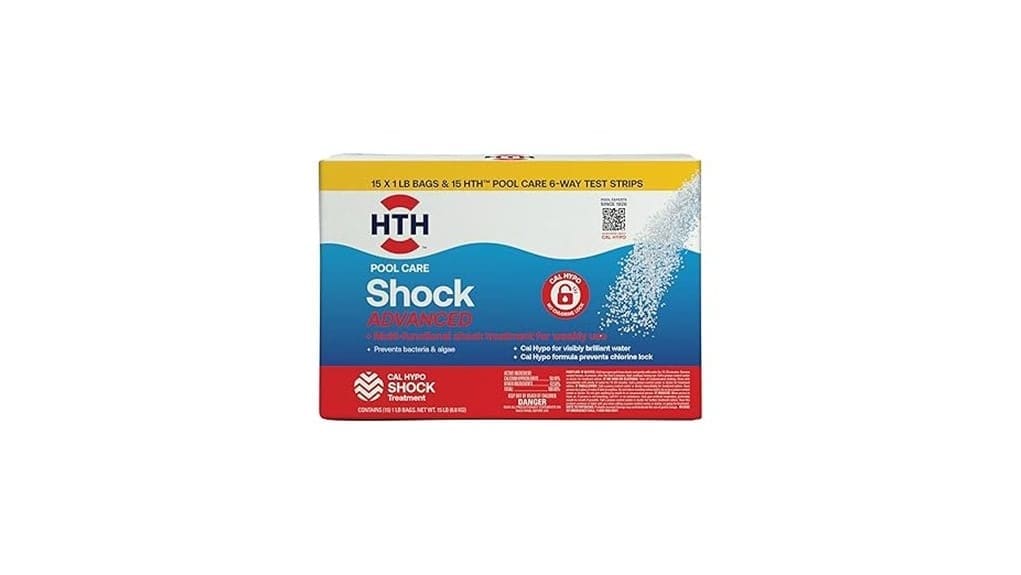
You get a 1 lb calcium hypochlorite shock plus 15 HTH 6‑way strips, so you can rapidly spike free chlorine and verify free chlorine, pH, alkalinity, hardness, bromine and CYA on the spot. The shock releases concentrated available chlorine to oxidize organics, reduce chloramines and slightly raise pH and hardness; circulate and filter after application. Expect clearer water within 24 hours with repeat dosing as needed, and storage must be cool, dry and sealed—more details follow.
Some Key Takeaways
- Includes 1 lb calcium hypochlorite shock plus 15 HTH 6‑way test strips for immediate sanitizing and testing.
- Shock rapidly raises free chlorine to oxidize organics, reduce chloramines, and improve clarity within 24 hours.
- Test strips measure free chlorine, pH, alkalinity, hardness, bromine, and CYA in seconds for quick water balancing.
- Slight temporary pH and hardness increases occur; circulate and follow label dosing for pool volume and target ppm.
- Store sealed in a cool, dry, ventilated location away from organics; follow safety and filtration practices.
What HTH 52044 Includes and Why It Matters
HTH 52044 ships a 1 lb container of calcium hypochlorite shock together with 15 HTH 6-way test strips, providing both an oxidizing sanitizer and immediate diagnostic capability in a single kit. You get a measured powder shock (cal-hypo) that raises free chlorine rapidly and a set of strips that quantify free chlorine, pH, alkalinity, hardness, bromine, and CYA within seconds. This pairing accessories approach lets you apply treatment and verify parameters without additional tools. Labeling specifies no CYA added; store sealed in a cool, dry location. For seasonal storage, keep containers tightly closed and isolated from organics. These products are ideal for homeowners who use chlorine tablets to maintain their outdoor pools, helping keep water safe and clear with proper chlorine tablet care.
How Calcium Hypochlorite Shock Works and What to Expect
Calcium hypochlorite shock works by releasing a concentrated burst of available chlorine into the water, rapidly raising free chlorine levels to oxidize organic contaminants, kill bacteria and algae, and break down combined chlorine (chloramines). You’ll measure an immediate free-chlorine spike; that active chlorine meets the pool’s chlorine demand as it oxidizes organics. Expect secondary effects: slight temporary pH increase from hypochlorite and incremental calcium hydroxide from calcium decomposition, which raises hardness marginally. Apply dissolved product per label, circulate thoroughly, and retest with the included HTH 6-way strips. Monitor free chlorine and pH until target ranges return. This product is ideal for homeowners who want to keep your pool sparkling and maintain safe, clear water.
Real-World Performance: Sanitizing, Clearing Cloudy Water, and Time-to-Results
Expect to see rapid sanitizing action and measurable clarity gains within a day when you dose this cal-hypo shock as directed. You’ll observe free chlorine spikes that neutralize bacteria and algae quickly; turbidity typically drops substantially within 24 hours. Monitor residual free chlorine to confirm kill rates without relying on cyanuric acid. Shock longevity depends on sunlight, bather load, and organic demand; plan repeat treatments accordingly. Minimal residue formation occurs if you pre-dissolve or broadcast per label, and filtration plus backwashing removes particulates released during oxidation. Time-to-results is predictable: immediate sanitizer boost, visible clarity in one day. Keep your pool pH balanced to maintain clearer, safer water and optimize shock performance.
Using the Included HTH 6‑Way Test Strips to Balance Your Pool
Start by dipping a strip and comparing colors immediately, since the 6-way test strips give rapid readings for free chlorine, pH, total alkalinity, hardness, bromine, and cyanuric acid so you can target adjustments precisely. You’ll read values against the chart, then adjust shock or alkalinity additives to meet established ppm targets for free chlorine and CYA management. Measure pH and total alkalinity to maintain buffering and sanitizer efficacy; hardness prevents corrosion or scale. Use strips regularly after shock and weekly for trending. For reliable data, follow strip maintenance: reseal the vial, avoid moisture, and replace strips per manufacturer shelf-life. Homeowners who enjoy their outdoor spaces should also consider routine testing as part of overall pool care to keep water clear and safe.
Who Should Buy It, Dosing Tips, and Safety/Storage Notes
If you manage an outdoor or indoor chlorinated pool and need a rapid, no‑frills sanitizer boost, this cal‑hypo shock with test strips is for you: it’s aimed at owners who want fast bacteria and algae control without adding stabilizer. Buyer guidance: choose this kit if you need shock plus immediate six‑parameter testing for routine maintenance or acute contamination. Dosage calculations: follow label ppm targets—raise free chlorine to 10 ppm for shocking or 3–5 ppm for routine; calculate pounds per 10,000 gal by label tables and adjust for pool volume. For pool safety and storage tips: keep dry, ventilated, locked, away from organics, and in original sealed container. Improve pool water clarity with the right filter powder to help your filtration system remove suspended particles more effectively.
Some Questions Answered
Can I Mix This Shock With Other Pool Chemicals?
No — you shouldn’t mix this shock with other pool chemicals. Calcium hypochlorite is reactive; chemical compatibility issues can cause violent reactions, toxic gases, or fire. You’ll follow handling precautions: add shock to water slowly, never pour other chemicals into the same container, wear protective gear, and store separately. If you must combine treatments, dilute and apply sequentially with ample circulation and testing between steps to confirm safe residual levels.
Is This Safe for Vinyl or Fiberglass Pools?
Yes — you can use it with vinyl and fiberglass when applied correctly. The calcium hypochlorite formulation raises free chlorine rapidly, so you’ll avoid surface damage by pre-dissolving granules, distributing evenly, and keeping swimmers out until levels return to safe range. Monitor with the included test strips for free chlorine, pH, and hardness; maintain recommended chlorine and pH limits to guarantee vinyl compatibility and fiberglass safety and prevent material degradation.
Will It Bleach Swimsuits or Pool Liners?
Yes — concentrated calcium hypochlorite can cause color fading and fabric weakening if swimsuits or liners contact undiluted product or if free chlorine stays very high. You should avoid splashing granular shock onto fabrics or vinyl; follow dosing, allow full dispersion, and wait until chlorine returns to recommended levels before swimming. Rinse affected garments promptly. Regular testing with strips prevents prolonged elevated chlorine that accelerates fading and material degradation.
Can I Use It in a Hot Tub or Spa?
No — you shouldn’t use this product in a hot tub or spa. The cal-hypo shock is too strong for spa water chemistry, so it risks excessive free chlorine, calcium buildup and liner or equipment damage; hot tubcompatibility is poor. Follow spausageguidelines: use products labeled specifically for spas, dose per manufacturer spa volume, and maintain target chlorine, pH and alkalinity with spa-safe oxidizers and test strips to avoid corrosion and user irritation.
Are Pets Allowed Near the Pool After Dosing?
No, you shouldn’t allow pets near the pool immediately after dosing; pets safety requires avoiding animal exposure until chlorine levels return to safe ranges. Wait until free chlorine measures are within recommended limits (typically 1–3 ppm for pools) and residual powder is fully dissolved. Use the included test strips to verify free chlorine, pH, and CYA; only permit animals when readings are normal and no strong chlorine odor or visible residues remain.