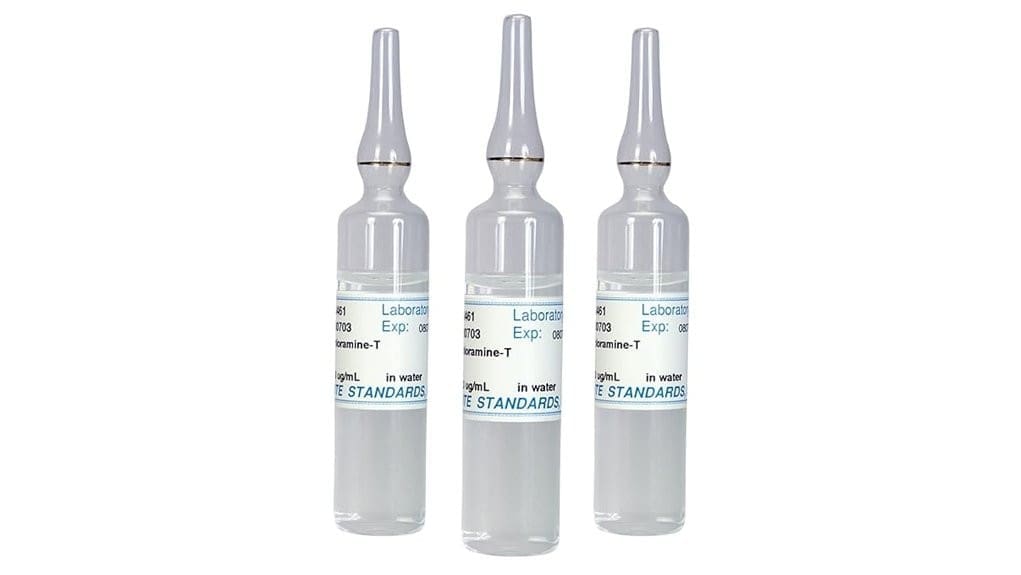
You’ll get two ready-to-use 2 oz bottles of Extech CL207 at 48 ppm that let you quickly verify high-range chlorine meters without mixing. Rinse and dry your cell, pour the specified volume, cap the bottle, and confirm a 48 ppm reading; results are consistent when you control temperature and avoid contamination. The compact, child-safe packaging reduces waste and suits field use, though matrix effects can bias real samples — keep going to see full pros, cons, and alternatives.
Some Key Takeaways
- Ready-to-use 48 ppm chlorine standard in two 2 oz bottles for quick, portable meter calibration.
- Consistent performance for routine high-range verification when instructions and temperature controls are followed.
- Two-bottle format reduces waste and preserves freshness for repeated field or bench checks.
- Accuracy suitable for routine calibration, though matrix effects in real samples can bias comparisons.
- Alternatives include single-use ampules or certified multi-point kits for traceability and calibration curves.
Quick Verdict: Is the Extech CL207 Chlorine Standard Solution Worth Buying?
Although it’s a niche accessory, the Extech CL207 is worth buying if you need a reliable, ready-to-use 48 ppm chlorine standard for calibrating meters in the lab or field. You’ll appreciate its compact convenience and straightforward use: two small bottles give immediate reference points without mixing. Performance is consistent for routine calibrations, and shelf management is simple. In a cost effectiveness comparison, the CL207 balances price against reduced waste and time savings versus ampules or homemade standards. If you require a stable, portable calibration solution for technicians or operators, this model delivers predictable results with minimal fuss. Keeping pool chemistry balanced is important for clearer, safer water, and using proper calibration standards helps ensure accurate measurements of pool pH.
What’s in the Box and Key Specs for the CL207 (48 Ppm, 2 X 2 Oz)
Inside the box you’ll find two pre-mixed 2 oz (≈60 mL combined) bottles of Extech CL207 chlorine standard solution at 48 ppm, an instruction guide, and standard product labeling with model/part (CL207), UPC/GTINs, and safety/handling notes. You’ll also get compact transport packaging sized for field kits; bottles feature child resistant caps and clear bottle labeling indicating lot and concentration. The set supports expiration tracking with lot-specific dates printed on labels to minimize guesswork. Weight and volume are optimized for portability; the two-bottle format preserves freshness for repeated calibrations and reduces waste. These kits are particularly useful for homeowners and technicians maintaining pool chlorine levels in outdoor spaces.
How to Use the CL207 for Fast, Reliable Chlorine Meter Calibration
When you need a quick, accurate calibration, use the CL207’s ready-to-use 48 ppm solution to verify and adjust your chlorine meter in three simple steps: rinse the sample cell, pour the specified volume from one of the 2 oz bottles, and follow your meter’s calibration procedure. Start with a clean cell and dry external surfaces. Use the bottle’s pour to deliver the volume your meter’s manual specifies; cap immediately to preserve remaining solution. Complete the calibration workflow by confirming the meter reads 48 ppm, record the result, and store bottles per instructions. Practice careful sample handling to avoid contamination. Keeping test results consistent helps keep pool water clear and ensures reliable readings.
Performance, Accuracy, and Real-World Pros and Cons From Labs and Field Use
Because the CL207 ships as a ready-to-use 48 ppm standard, you can rapidly verify a meter’s high-range response with minimal prep, and in practice it delivers consistent readings across repeated lab and field checks. You’ll find accuracy meets routine calibration needs: deviations typically fall within expected tolerance when you control temperature and follow instructions. In field samples, account for matrix effects—high organics or salts can bias results versus pure water. Use the CL207 frequently to detect sensor drift early; spotting a trend lets you recalibrate or service probes before data integrity suffers. Portability and shelf life are practical advantages. This makes it a handy tool for homeowners maintaining outdoor water features who also monitor pool conditions.
Who Should Buy the CL207 and Best Alternatives to Consider
If you need a compact, ready-to-use high-range chlorine standard for routine calibrations, the Extech CL207 is ideal for water treatment operators, pool technicians, lab staff, and environmental inspectors who routinely verify meters in the 48 ppm range; its two-bottle format keeps standards fresh for repeated field or bench checks, reduces waste, and lets you quickly detect probe drift before it affects results. You should buy the CL207 if you need portability, quick verification, and consistent 48 ppm reference values. Alternatives: single-use ampules for one-time accuracy, broader-range multi-point standards for calibration curves, or manufacturer-specific kits when traceability and certificates matter. This product is a good fit for homeowners who use simple test kits to keep their outdoor pool water safe by performing routine checks with reliable reference standards, especially when portability and ease of use are priorities for maintaining pool water safety.
Some Questions Answered
Are There Hazardous Material Shipping Restrictions for CL207 Bottles?
Yes — you’ll likely face restrictions: shipping classifications for CL207 depend on chlorine concentration and carrier rules, and transport limits often exempt small consumer quantities. Because these are 48 ppm, two 2 oz bottles are generally treated as non-hazardous small quantities, but carriers differ. Always check carrier-specific shipping classifications, applicable local/ICAO/IMDG/IATA rules, and your shipper’s transport limits; label and paperwork may still be required.
Is the CL207 Compatible With All Extech Chlorine Meter Models?
Yes — you can use the CL207 for model compatibility across most Extech chlorine meters that require a 48 ppm calibration standard. You’ll perform probe calibration by following each meter’s calibration routine and applying the ready-to-use solution to the sensor. Check your meter manual to confirm supported standard concentrations; some older or ampule-specific CL200 variants may require different formats or concentrations for accurate calibration.
Can I Store Opened Bottles at Room Temperature Long-Term?
No — you shouldn’t store opened bottles at room temperature long-term. You’ll accelerate bottle aging and reduce storage stability if you leave them exposed to heat and light. Keep opened bottles tightly sealed, stored cool and away from direct light to limit light sensitivity effects. Use within the manufacturer’s recommended timeframe, label opened date, and discard if color or odor changes appear to guarantee accurate calibration and reliable results.
Are Refill or Bulk Sizes Available for Frequent Users?
Yes — you can get larger quantities for frequent use, though availability varies. You’ll find bulk bottles from third-party suppliers and some vendors offering a subscription service for recurring shipments. Check manufacturer channels and major lab-supply retailers for sealed multi-bottle packs or larger-volume options. Verify concentration (48 ppm), shelf-life, shipping restrictions, and return policies before ordering. Consider subscription service discounts to maintain fresh standards and reduce handling risk.
Does the CL207 Require Disposal as Hazardous Waste?
No, the CL207 usually isn’t classified as hazardous waste, but you should follow disposal guidelines and local regulations. You’ll want to avoid pouring concentrated standard down drains; dilute small amounts with large volumes of water if allowed. Check your municipality’s rules and your facility’s chemical disposal procedures. If unsure, treat it as chemical waste and use a licensed disposal service or your institution’s hazardous waste program to be safe.