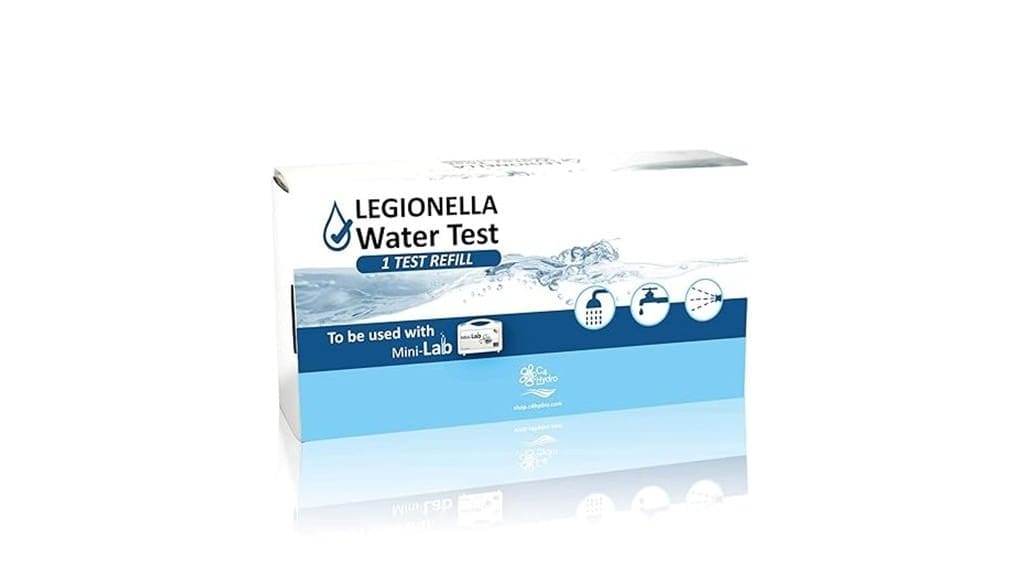
You can get lab-grade Legionella pneumophila screening at home with this C4Hydro Mini‑Lab‑compatible kit; it concentrates and enriches samples, uses selective incubation plus enzymatic amplification, and gives visible, controlled results in about 48 hours. The consumables and on‑screen prompts simplify setup and help maintain sterility, and sensitivity reaches roughly 1 CFU/ml when procedures are followed. Use positives to stop aerosol use and seek ISO 11731 confirmation with an accredited lab, and more details follow below.
Some Key Takeaways
- Detects Legionella pneumophila at high sensitivity (~1 CFU/ml) for rapid home screening.
- Provides readable results in about 48 hours using a Mini‑Lab incubation and enzymatic signal.
- Consumables integrate with the C4Hydro Mini‑Lab; kit includes substrate strips, sterile tools, and a user guide.
- Positive home results require immediate mitigation and confirmatory testing by an accredited ISO 11731 lab.
- Troubleshooting focuses on sterile technique, correct incubation, adequate sample volume, and intact consumables.
Quick Verdict: Is the Legionella Water Test Good for Home Use?
Though it’s built on a professional laboratory method, the Legionella Water Test is designed for straightforward home use: it gives lab-equivalent, ultra-sensitive detection (down to 1 L. pneumophila per ml) with readable results from 48 hours and includes all consumables and a user guide, provided you have the C4Hydro Mini‑Lab set up. You’ll find it practical for routine home maintenance of hot water systems, spas, and tanks. The kit’s validated performance and clear protocol reduce sampling error. User costs are limited to the consumables kit and Mini‑Lab purchase; overall it’s a cost-effective, actionable screening tool for household risk management. It’s particularly useful for homeowners who maintain outdoor water features and pools where proper safety rope placement and clear hazard demarcation are part of keeping water areas secure.
How the Legionella Water Test Works and Why Results Appear in 48 Hours
Because the kit adapts a validated laboratory protocol into a portable format, you run a controlled enrichment and detection sequence that concentrates any Legionella pneumophila present and produces a visible signal within about 48 hours. You incubate the sample under conditions that favor Legionella growth, then apply a proprietary reactive substrate. The test uses enzymatic amplification to boost signal from minute bacterial loads, delivering ultra high sensitivity (≈1 CFU/ml). Built-in controls and selective conditions give rapid specificity for L. pneumophila versus background flora. The method mirrors laboratory standards but compresses incubation and detection steps for prompt, actionable home results.
What’s in the Kit, Compatibility With the C4HYDRO Mini-Lab, and Setup Steps
What’s included in the Legionella Water Test kit, and how it hooks up to your C4Hydro Mini-Lab? You receive a consumables pack containing reactive substrate strips, sterile sampling tools, sealed reagents, and a concise user guide — the kit contents match professional protocol requirements. The consumables integrate with the C4Hydro Mini-Lab platform (sold separately); the Mini-Lab provides controlled incubation and reading. For setup steps, unbox on a clean surface, confirm sterility seals, load substrate into the Mini-Lab holder, insert reagent vials per guide, and connect the Mini-Lab to power. Follow on-screen prompts to start the assay and log samples. Floating pool thermometers are helpful for routine pool care and accurate temperature recording to complement your water safety efforts, especially when monitoring outdoor water quality.
Real-World Testing: Step-by-Step Home Use, Expected Sensitivity, and Troubleshooting
Ready to test? You collect a representative sample following the guide: flush the tap, use sterile vial, label, and perform sample collection within recommended dwell times. You prepare the Mini-Lab, apply the consumable substrate, and inoculate promptly. Observe incubation timing: results become readable from 48 hours; continue monitoring to verify signal stability. Expected sensitivity reaches 1 Legionella pneumophila per ml under proper technique. Troubleshoot by confirming sterile technique, adequate sample volume, correct incubation temperature, and intact consumables. If controls fail or ambiguous, repeat with fresh sample and consult the user guide for documented corrective steps. For home pool and outdoor water safety, it’s also wise to keep a well-stocked first aid kit nearby to handle any incidents while testing.
When to Act on a Positive Result and How This Compares to Lab Testing and Regulation
If your Legionella Water Test shows a positive result, act promptly: stop using the affected outlet or system for potable or aerosol-generating purposes, notify household members, and implement immediate mitigation measures such as flushing, thermal disinfection, or shock chlorination per the user guide while arranging confirmatory testing. You should initiate immediate remediation and secure samples for an accredited laboratory using ISO 11731 methods to confirm presence and quantify risk. Home tests give rapid, high-sensitivity screening (from 1 CFU/ml) but labs provide legally recognized quantification and guidance for public notification, reporting, and regulatory compliance. Follow health authority advice.
Some Questions Answered
Can This Kit Detect Non-Pneumophila Legionella Species?
No — the kit targets Legionella pneumophila specifically and won’t reliably detect non-pneumophila species. You’ll still benefit from excellent test sensitivity (detects from 1 L. pneumophila per ml), but species coverage is limited to the pneumophila species. If you need broader detection, you’ll want a method or kit validated for multiple Legionella species or a laboratory assay that reports species-level identification to guarantee thorough screening.
Are Test Consumables Single-Use or Reusable?
The test consumables are single use vs. reusable: they’re single-use only. You won’t reuse reacted substrates or sterile components because the method and sterility ratings require disposal after one test. Follow the included user guide for proper handling and waste disposal. Check consumable shelf life printed on packaging and store as directed; expired items can compromise sensitivity and results. Replace consumables before their consumable shelf life ends to guarantee reliable detection.
How Should Unused Kits Be Stored and for How Long?
Store unused kits sealed, dry and protected at the recommended shelf temperature (room temperature, away from heat and sunlight). You should keep them in their original packaging and avoid humidity or freezing. Practice expiration monitoring: check lot and expiry dates before use, rotate stock first-in/first-out, and discard any kits past expiry. Under these conditions the consumables remain stable for the manufacturer-stated shelf life; don’t use damaged or compromised kits.
Is the Kit Safe for Users With No Lab Experience?
Yes — you can use it safely with no training or supervision required. The kit’s protocol is simplified and evidence-based, designed for nonprofessional users. You’ll follow clear instructions, practice simple handling, and observe household precautions (gloves, avoid ingesting samples, disinfect surfaces). The Mini-Lab setup is needed beforehand, but routine tests don’t demand lab skills. If results are positive or unclear, seek professional testing and remediation.
Can Results Be Shared With Public Health Authorities?
Yes — you can share results with public health authorities; many agencies accept self-reported findings as actionable alerts. You should verify local public reporting requirements and follow their submission procedures. Protect data privacy by removing personal identifiers unless required, and keep original test documentation. If results are positive, notify authorities promptly so they can advise confirmatory testing and remediation steps; retain timestamps and photos to support your report.