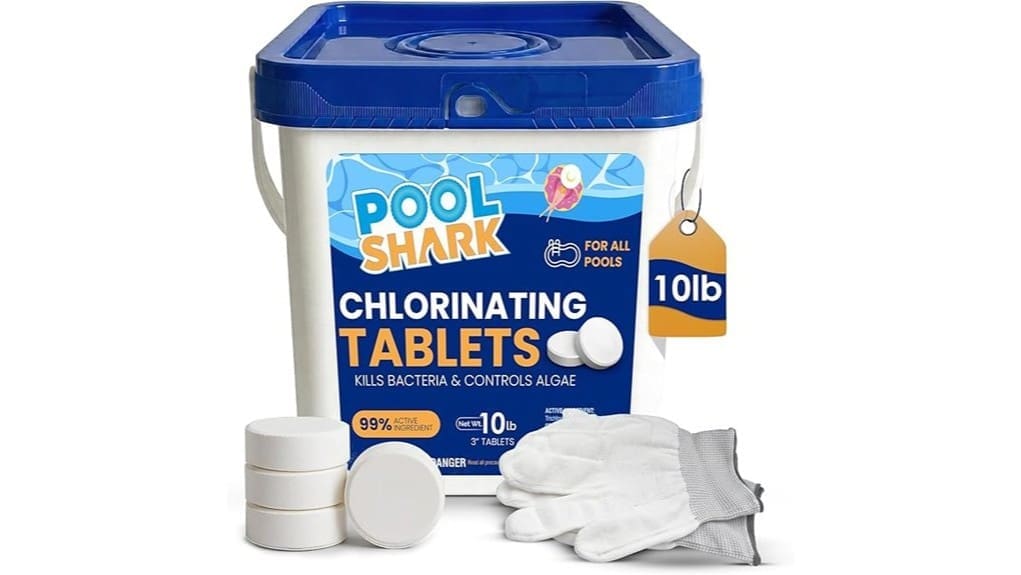
You’ll get steady, low-maintenance sanitization with Pool Shark 3-inch trichloro tablets that release ~90% active chlorine slowly over several days for consistent residuals and algae prevention. Use approved floaters, skimmers, or inline feeders and monitor free/combined chlorine and cyanuric acid to avoid buildup. Handle with gloves, eye protection, and dry storage; never mix with other chemicals. Expect predictable dissolution influenced by temp and flow, and continue for detailed dosing, safety, and compatibility guidance.
Some Key Takeaways
- Tablets are 3-inch trichloro-s-triazinetrione discs delivering ~90% active chlorine for slow, multi-day sanitization.
- Predictable dissolution in typical backyard conditions maintains residual free chlorine and helps prevent algae.
- Stabilized formula raises cyanuric acid and combined chlorine; monitor levels and shock periodically.
- Compatible with floaters, skimmers, and chlorinators for most pool types; place near returns for better mixing.
- Store sealed in a cool, dry place, use PPE when handling, and compare cost per ppm with granules and competitors.
Quick Verdict: Is Pool Shark 3 Chlorine Tablets Worth Buying?
Although you’re aiming for low-maintenance pool care, you’ll still want consistent sanitization; Pool Shark 3-inch chlorine tablets deliver that by releasing 90% active chlorine slowly over several days. You’ll find them effective at maintaining residual free chlorine, preventing algae, and reducing shock frequency. For decision-making, perform a cost comparison against granular chlorine and competing tablets, factoring dosing consistency and labor savings. Consider environmental impact: stabilized trichloro-s-triazinetrione persists longer and can elevate combined chlorine and cyanuric acid levels, so monitor levels and avoid overdosing. Follow label safety, use proper dosing devices, and store tablets in a cool, dry area. Many homeowners prefer these tablets because they simplify regular dosing and reduce manual handling of chlorine for safety.
What’s Inside the Box and Key Specs (3 Tablets, 10 Lbs, 90% Active Chlorine)
Having weighed the maintenance trade-offs in the quick verdict, you’ll want to inspect exactly what you get and how it’s specified. You receive a 10 lb container holding ten 3-inch tablets (item count: 10; model CT-10). Labeling lists 99% trichloro-s-triazinetrione with 90% active chlorine; UPC and ASIN are printed for traceability. Check packaging integrity on arrival—seal, moisture barrier, and corrosion-free container—before storage. Tablet dimensions and uniform mass matter for feed rate consistency in floaters or chlorinators. Safety data, handling instructions, and manufacturer warranty/contact info are included for compliant use and emergency response. Many homeowners use shock treatment seasonally to maintain clear, safe backyard pools.
Performance in Real Use: Dissolution Rate, Sanitizing, and Algae Control
When you place a 3-inch Pool Shark tablet in a floater, skimmer, or chlorinator, it dissolves predictably over several days at typical backyard pool temperatures, delivering a steady chlorine residual that sanitizes and inhibits algae growth. You’ll observe slow, controlled release consistent with 90% active chlorine, maintaining free chlorine levels between shocks. Monitor residuals to detect dissolution variability caused by temperature, circulation, or debris. For algae control, maintain recommended ppm and address blooms with targeted shock. Follow label safety: avoid direct contact, store dry, and consider environmental impact when disposing packaging or excess product to minimize aquatic toxicity. Homeowners often combine these chemicals with other pool-opening products to ensure a sparkling start.
Where and How to Use Them: Pool Types, Feeders, Floaters, and Shock Pairing
Because Pool Shark 3-inch chlorine tablets dissolve slowly and deliver a high active-chlorine residual, you can use them across most pool types—inground, above-ground, vinyl-lined, salt systems, spas, and hot tubs—by placing tablets in approved floaters, skimmer baskets, or automatic chlorinators to maintain steady sanitizer levels. For safe Pool maintenance, confirm compatibility with your pool surface and salt system manufacturer. Position feeders for even dispersion; feeder placement near return lines improves mixing, floaters suit small pools, skimmers protect equipment. Pair tablets with weekly shock doses of chlorine granules to oxidize organics and reset combined chlorine for reliable water hygiene. Homeowners can also consider regular use of algaecides to help keep outdoor pool areas clear and reduce algae growth.
Buying Considerations: Price, Quantity, Safety, Returns, and Who Should Buy
After you’ve confirmed compatibility and set up feeders or floaters, consider the concrete buying factors that affect safety, economy, and maintenance workload. Evaluate pricing tiers by tablet count and per-tablet active chlorine; the 10-tablet, 10 lb pack offers high active chlorine at competitive unit cost. Plan quantity for your pool volume and feed rate to avoid overdosing. Follow strict safety precautions: store sealed, keep away from combustibles, use gloves and eye protection, and never mix with other chemicals. Note Amazon’s 30-day return window and manufacturer warranty channels. Buy if you want low-maintenance, steady sanitization for residential or community pools. Store chemicals in a cool, dry place away from sunlight and moisture to prolong effectiveness and reduce hazards, and consider using dedicated chemical storage containers designed for pools.
Some Questions Answered
Are These Tablets Safe for Use With Pool Heaters?
Yes — you can use them with pool heaters if you monitor conditions. Their heater compatibility is acceptable because slow-dissolving trichloro-s-triazinetrione tablets offer good thermal stability at typical pool temperatures. Don’t place tablets directly inside heater units or near heat elements; use floaters or chlorinators upstream. Maintain recommended chlorine and pH levels, follow manufacturer heater safety guidelines, and avoid concentrated contact to prevent corrosion or damage to heater internals.
Can They Stain Pool Liners or Decking Surfaces?
Yes — if tablets or concentrated bleach residue sit against liners or decking, you can get material discoloration. You should avoid placing tablets directly on vinyl liners or porous decking. Use floaters, skimmers, or automatic feeders to prevent contact and disperse chemicals evenly. Rinse any spills promptly, monitor free chlorine, and follow manufacturer safety guidance to minimize bleaching, fabric weakening, and surface staining risks.
Do Tablets Affect Pool pH or Alkalinity Long-Term?
Yes — tablet decomposition releases acidic byproducts that can lower pH and consume alkalinity over time, so you’ll monitor both. You’ll note buffer interaction: carbonates/bicarbonates resist pH shifts but get depleted with continuous dosing. Maintain total alkalinity within recommended range and adjust with alkalinity increaser as needed. Test frequently, especially after heavy use or shock, and follow safety protocols to prevent corrosive conditions and protect liners or equipment.
Are They Approved for Commercial Public Pools?
Not automatically — you’ll need to verify municipal regulations and health inspections before using them in commercial public pools. These 3-inch trichloro tablets are effective sanitizers, but public pool use is governed by local codes, required dosing, and documented safety practices. Consult your local health authority, provide material safety data and maintenance records for inspections, and confirm compatibility with approved feeders and circulation systems to guarantee regulatory compliance and safe operation.
Can Tablets Be Used in Salt Chlorinator Systems Continuously?
Yes — you can use tablets for salt compatible maintenance, but you shouldn’t run them continuously inside the chlorinator cell. You’ll maintain sanitizer levels by placing tablets in a floater, skimmer, or feeder, avoiding direct contact with metal parts to minimize corrosion risk. Monitor free chlorine and stabilizer levels regularly, follow manufacturer guidance, and alternate with shock treatments to prevent buildup and protect salt system components.