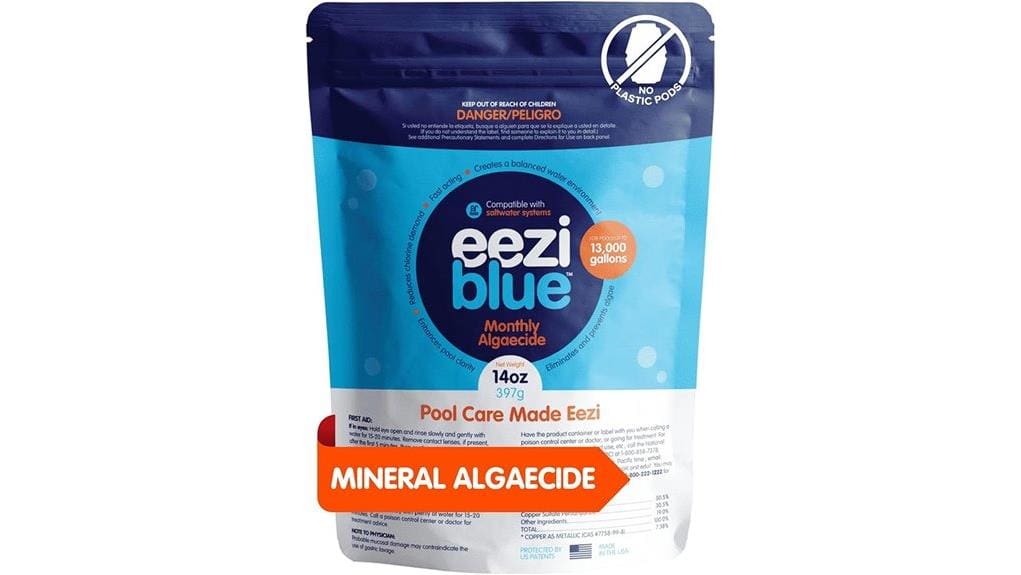
Eeziblue Monthly Algaecide lets you do a simple, monthly preventer for inground, above‑ground, and saltwater pools with one pre‑measured copper‑zinc powder dose that cuts chlorine demand and suppresses all algae types. It disperses easily, improves clarity within days for light outbreaks, and reduces filter clogging. You’ll need to monitor pH and copper if you dose often to avoid staining, but it’s a low‑effort, budget‑minded choice that’s compatible with most chlorine and salt systems — keep going to get full usage and safety details.
Some Key Takeaways
- Monthly pre-measured copper-zinc powder simplifies algae prevention for inground, above-ground, and saltwater pools.
- Effective at reducing chlorine demand and suppressing all algae types when used as directed.
- Visible clarity improvements and fewer blooms within days to weeks for light infestations.
- Must test metals and avoid over-dosing to prevent copper staining and toxicity risks.
- Best for homeowners wanting low-effort monthly maintenance; skip if using small pools or full-coverage chemical systems.
Quick Verdict: Who Should Consider Eeziblue Monthly Algaecide
If you want a low-effort, monthly preventive treatment that works in inground, above-ground, and saltwater pools, Eeziblue Monthly Algaecide is worth considering. You’ll appreciate a single pre-measured powder dose that treats large volumes, cuts chlorine demand, and targets all algae types. Budget conscious owners find value in simplified maintenance—less need for extra clarifiers or phosphate removers—while seasonal users like predictable monthly scheduling. You’ll join others who prefer straightforward, evidence-backed prevention over frequent troubleshooting. It’s practical if you want reliable algae control, clearer water, and a maintenance routine that fits shared expectations without complex equipment. As a homeowner who enjoys outdoor spaces, using a targeted algaecide can help maintain clear water and reduce time spent on pool upkeep with simple preventative steps.
What’s in the Bag: Ingredients, How It Works, and Compatibility
Because it’s a mineral-based powder, the single-dose bag combines copper and zinc compounds to inhibit and kill algae while lowering overall chlorine demand. You get a pre-measured mineral mix designed for monthly use; active copper and zinc provide broad-spectrum control and reduce sanitizer burnout. Follow label rates to avoid copper toxicity — test metals if you dose often. The formulation works through targeted mineral interaction that disrupts algal cells and supports clearer filtration. It’s compatible with liquid chlorine, tablets, shock, and saltwater systems, though you’ll manage pH separately to maintain efficacy and equipment longevity. Homeowners who enjoy their outdoor spaces can incorporate monthly shock and maintenance routines to keep pools sparkling and balanced, and should consider shock treatment tips as part of regular care.
Real-World Performance: Algae Prevention, Treatment, and Pool Clarity Results
When you use Eeziblue Monthly as directed, you’ll typically see fewer algae blooms and clearer water within a few weeks; its copper-zinc minerals suppress new growth and help existing light infestations die back, reducing the load on your chlorine. In practice, you’ll notice improved visual clarity and easier filtration cycles — skimmer baskets and filters clog less often. For prevention, monthly dosing keeps most pools free of green, yellow, and mustard algae; for light outbreaks, a single dose often brings visible improvement within days. Reports suggest solid long term efficacy when combined with routine maintenance, so you won’t fight algae alone. Many homeowners also combine enzyme-based treatments with algaecides to maintain pool clarity and overall water balance.
How to Use It Safely and Effectively (Dosage, Timing, pH Tips)
Before dosing, test and adjust your pool chemistry so pH is 7.2–7.6 and free chlorine is within normal range; this guarantees the copper-zinc minerals work efficiently and don’t get bound up by high pH or depleted chlorine. Use one pre-measured powder per month per labeled gallon capacity—don’t guess doses. For safe handling, wear gloves, avoid inhaling dust, and keep kids/pets away. Broadcast the powder around deep end with pump running for even distribution; note application timing: add after evening swim when chlorine stabilizes. Recheck pool pH weekly and adjust as needed to maintain effectiveness and shared pool health. For best results when opening your pool in spring, combine this regimen with other essential pool opening chemicals like shock, algaecide, and stain preventer for a sparkling start.
Buy-or-Skip Checklist: Coverage, Cost, Pros, Cons, and Alternatives
If you’re weighing whether to buy or skip Eeziblue Monthly Algaecide, focus on coverage, cost-effectiveness, and trade-offs: one pre-measured dose treats up to 13,000 gallons (manufacturer notes a 21‑oz bag option for pools up to 20,000 gallons) and is meant for monthly preventive use, so for an average backyard pool you’ll need a predictable, low-frequency purchase cycle; the copper‑zinc formula lowers chlorine demand and helps clarity, but you should factor in initial price per dose, compatibility with your sanitizer (works with liquid chlorine, tablets, shock, and salt systems), and the potential for metal staining if dosed improperly or pH isn’t maintained.
Do buy if you value simple monthly dosing, reduced chlorine use, and clearer water. Consider a price comparison for multi-dose alternatives or an ionizer if you want long term savings. Skip if you run a small pool, worry about staining, or already use an all-inclusive chemical routine. Many homeowners also pair mineral systems with monthly algaecides to enhance outdoor pool maintenance and overall water quality.
Some Questions Answered
Is Eeziblue Safe for Pool Plants and Fish?
Generally, yes — it’s considered low aquatic toxicity when used as directed, so you can keep plants and fish safe with caution. You’ll want to monitor plant tolerance and avoid overdosing or direct application to sensitive plants or shallow areas with fish. Follow label dosage, circulate water well, and wait recommended intervals after treatment before reintroducing delicate species. If you’re unsure, test a small area first and consult the manufacturer.
Can It Stain Pool Liners or Surfaces?
Staining risk is low if you follow directions, but you should still check surface compatibility first. You’ll want to rinse spills and avoid concentrated contact on vinyl liners, porous stone, or metal fixtures. Use the single pre-measured dose and distribute it evenly; maintaining proper pH and chlorine levels further reduces risk. If you’re nervous, test a small hidden area and contact the manufacturer for guidance so you’re confident and included.
How Does It Affect Pool Water Color Temporarily?
You’ll see only minor, short-lived changes: the dose can cause temporary cloudiness and slight tinting (a bluish-green cast) as minerals disperse and bind algae. That clears within hours to a day with normal filtration and routine chlorination; brushing and running the pump speeds it up. If cloudiness persists beyond 24–48 hours, test chemistry and filter; backwash or clean as needed. You’ll feel reassured it’s a normal, manageable effect.
Is Monthly Dosing Safe With Automatic Chemical Feeders?
Yes — you can use Automatic feeders with monthly dosing, but don’t set continuous feed. You’ll want to add the single pre-measured dose manually on schedule and let the feeder handle routine chlorine or sanitizer. Stagger dosing intervals so copper/zinc minerals aren’t constantly introduced through the feeder. Follow product instructions, monitor sanitizer and pH, and the group will feel confident knowing you’ve balanced prevention with safe automated maintenance.
Are There Storage Temperature Restrictions for Unused Packets?
Yes — you should store unused packets in a cool, dry place; recommended storage temp is room temperature (avoid extreme heat or freezing) to preserve packet integrity. Keep packets sealed, away from moisture and direct sunlight, and out of reach of children and pets. You’ll maintain product effectiveness and avoid clumping or degradation. If a packet looks compromised, don’t use it; contact the manufacturer for guidance and replacement.