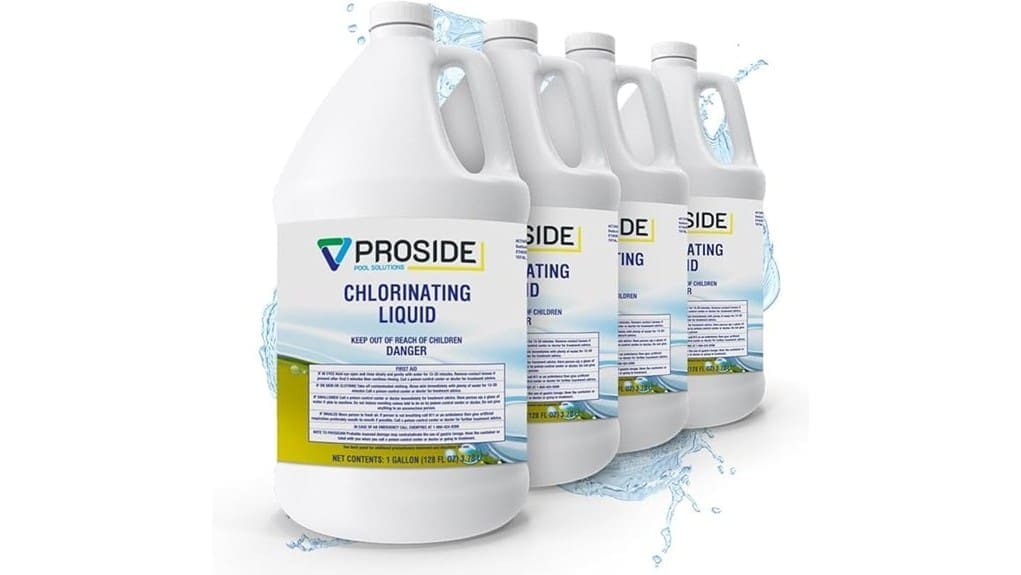
You’ll get a predictable, workmanlike 10% sodium‑hypochlorite shock in a cost‑efficient 4‑gallon pack that makes dosing and routine chlorination straightforward. It delivers a rapid free‑chlorine boost for oxidizing organics and biofilms, supports quick clarity gains with filtration, and yields consistent residuals when you follow manufacturer dilutions. Measure pool volume, add to deep water with pumps running, and store sealed in cool shade to limit degradation. Continue for full handling, dosing, and safety guidance.
Some Key Takeaways
- ProSide 4-gallon contains 10% sodium hypochlorite, suitable for routine shock and predictable free‑chlorine boosting.
- Bulk 4‑gallon packaging lowers per‑gallon cost and reduces purchase frequency compared with smaller bottles.
- Requires larger dosing volumes than higher‑strength shocks; measure pool volume and follow dilution guidance precisely.
- Store sealed in a cool, ventilated, shaded area; expect degradation from heat and sunlight.
- Use PPE, add to deep water with pumps running, never mix with acids or ammonia, and test residuals after dosing.
Quick Verdict: Is ProSide Chlorinating Liquid 4 Gal Worth Buying?
Generally, if you need a reliable, concentrated pool-shocking solution, ProSide Chlorinating Liquid 4 Gal is worth buying. You’ll get a 10% sodium hypochlorite formulation that’s straightforward to dose for shock and routine chlorination. Measure by volume, follow manufacturer dilution guidance, and avoid mixing with acids or ammonia—chemical compatibility matters. For long term storage, keep the sealed container in a cool, ventilated area away from sunlight to limit degradation. You’ll appreciate predictable free chlorine contribution and simple handling for maintenance cycles. It’s a practical choice if you prioritize consistent disinfection performance and operational clarity. For homeowners maintaining outdoor pools, following basic shock treatment tips will help keep swim areas safe and sparkling.
How Well It Works: Chlorine Strength, Clarity Restoration, and Sanitization Performance
ProSide’s 10% sodium hypochlorite delivers a predictable free‑chlorine boost that you can calculate and dose precisely for shock or routine treatments. You’ll see rapid contaminant oxidation: organics and biofilms break down, turbidity drops, and clarity restoration is measurable within hours when combined with filtration. Expect predictable chlorine degradation rates under sunlight and heat; plan dosing accordingly. Residual testing confirms maintenance-level free chlorine that sustains sanitization without over‑chlorination. Consider bathymetric safety for deep or stepped pools—ensure even distribution to avoid localized under‑treatment. Overall, performance is consistent, technically reliable, and suited for routine pool and spa disinfection. For homeowners looking to maintain outdoor pool areas, pairing this product with proper chlorine tablet storage and handling practices helps keep pool maintenance safe and effective.
How to Use ProSide 10% Sodium Hypochlorite Safely and Effectively
When preparing to dose ProSide 10% sodium hypochlorite, always measure volume and pool capacity precisely and wear appropriate PPE—chemical-resistant gloves, eye protection, and a respirator if ventilation is poor. You’ll calculate required ppm, dilute only in well-ventilated areas, and add to deep water with pumps running. Always wear protective gloves and avoid mixing with acids, ammonia, or other chemicals. Keep the container closed, store upright in a cool shaded area, and ensure the childproof cap is engaged after use. Rinse spilled product with plenty of water, ventilate treated areas, and document doses for safe repeat applications. Store chemicals in a well-ventilated, shaded space and use proper chemical storage to protect children and pets.
Value and Packaging: Cost Per Gallon, Size Benefits, and Storage Considerations
After you’ve handled dosing and safety, consider how ProSide’s 4-gallon packaging and 10% sodium hypochlorite concentration affect your operating costs and storage plan. You’ll get bulk savings per gallon versus smaller bottles; calculate cost per gallon using current retail to compare alternatives. The 4-gallon size reduces purchase frequency and container waste but demands secure, ventilated storage away from heat and organic materials. Keep the container upright, capped, and out of direct sunlight; the childproof cap adds a safety layer but doesn’t replace locked storage. Rotate stock by date, inspect for leaks, and follow local disposal regulations for concentrated bleach. Many homeowners find that integrating a routine skimmer maintenance check helps prolong the life and effectiveness of their pool equipment.
Final Pros and Cons for Pool Owners and When to Choose This Product
Although it’s a concentrated, lower-strength (10% NaOCl) option, this 4-gallon ProSide Chlorinating Liquid gives you predictable shock performance and lower per-gallon cost for routine pool and spa sanitation. You get reliable sanitization, straightforward dosing, and bulk packaging that reduces refill frequency and supports a consistent maintenance schedule. Downsides: lower active concentration means larger volumes for heavy contamination, and liquid sodium hypochlorite degrades with heat/light, so storage and handling matter. Choose it if you prioritize cost-effective, routine chlorination and predictable clarity restoration. Avoid it when you need rapid, high-strength shock or minimal environmental impact risks. Many homeowners find bulk options like this helpful for maintaining their outdoor spaces throughout the swimming season.
Some Questions Answered
Is This Product Safe to Use on Vinyl-Lined Pools?
Yes — you can use it on vinyl-lined pools if you follow proper dilution and dosing. The 10% sodium hypochlorite provides effective sanitization without inherently causing vinyl discoloration or compromising liner adhesion when applied per instructions. You’ll want to avoid concentrated contact, monitor free chlorine and pH, and perform routine shock treatments as directed. Improper overuse or prolonged high chlorine levels can increase risk to liner appearance and bonding.
Can I Mix Proside With Other Pool Chemicals?
Yes — but cautiously. You should never directly mix ProSide (10% sodium hypochlorite) with other pool chemicals because chemical compatibility and dosing interactions can create hazardous reactions. Add chemicals separately, follow manufacturer dosing instructions, wait recommended intervals, and make certain proper circulation before adding another product. For combined treatment plans (shock plus algaecide, pH adjusters, or stabilizers), calculate doses to avoid over-chlorination and consult product SDS or a pool professional for safe sequencing.
What Is the Shelf Life Unopened and After Opening?
Unopened, you can expect roughly 1–2 years if stored at recommended storage temperature (cool, dark, 50–77°F); manufacturer expiration testing determines exact shelf life. After opening, plan on 6–12 months of reliable free available chlorine if you reseal and minimize air exposure, keep product cool, and avoid contamination. Always check manufacturer labels and consider periodic concentration testing to confirm active strength before use.
Does It Affect Pool Equipment or Metal Fittings?
Yes — concentrated chlorine can promote metal corrosion and equipment discoloration if misused. You should maintain proper dilution, follow label dosing, and stabilize pH to minimize oxidative attack on heaters, pumps, ladders, and fittings. Rinse exposed metal after high-dose treatments, use corrosion-resistant materials (stainless/bronze/plastic), and monitor total chlorine and free chlorine levels. Regular maintenance and chemical balance will protect equipment longevity and appearance.
Is It Approved for Use in Public/Commercial Pools?
You can use it in public facilities only if local regulatory compliance permits sodium hypochlorite products at 10% concentration. Check municipal and state public/commercial pool codes, because permitted formulations, labeling, handling, storage, and dosing limits vary. You’ll need to verify safety data sheet, manufacturer warranty, and recordkeeping requirements. Maintain appropriate signage, trained staff, and corrosion control measures. If unsure, consult your public health inspector or certified pool operator to confirm approval.